what isnasal repair?What conditions require nasal repair surgery?
Nasal repair refers to secondary or multiple surgical corrections for morphological or functional abnormalities after previous rhinoplasty. Common reasons for nasal repair include: distortion or displacement of the prosthesis, deformation of the bridge of the nose caused by capsule contracture, infection or rejection, excessive difference in postoperative nasal shape from expected, deviation of the nasal septum affecting ventilation, etc.
Shanghai NameiReminder: Nasal repair surgery is usually more difficult than the first nasal plastic surgery because the original tissue has changed. Before surgery, a specialist needs to evaluate the original material type, degree of tissue adhesion and basic conditions of the nose in detail to formulate a personalized repair plan.
What are the common reasons for nasal repairs?
1. The prosthesis is skewed or displaced
The placement position of the prosthesis deviates from the median line of the bridge of the nose, and the appearance is obviously skewed. Common reasons include: mismatch between the prosthesis carving and the curvature of the nasal bone, asymmetric separation of the cavity, and collision of external forces after surgery. Restoration methods usually require removing the original prosthesis, re-carving or replacing it with new materials, and re-establishing symmetrical cavities.
2. Capsule contracture (shortened nose bridge and exposed nostrils)
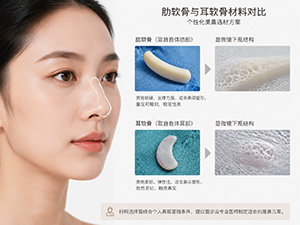
Abnormal shrinkage occurred after the capsule formed around the prosthesis, pulling the skin of the bridge of the nose upward, causing the bridge of the nose to become shorter, the tip of the nose rotated upward, and the nostrils to be exposed (commonly known as the "pig nose"). It is common in L-shaped prostheses or after multiple surgeries. Repair usually requires complete release of the capsule, replacement of a new prosthesis, and covering it with costal cartilage or fascia if necessary.
3. Prosthesis infection or rejection
Postoperatively, redness, pain, exudate or exposed prosthesis are often indicative of infection or rejection. Once an infection is diagnosed, the prosthesis needs to be removed as soon as possible, debridement and drainage, and repair should be considered after the tissue is restored and stable (generally it takes 3-6 months).
4. The nose shape does not match expectations
Postoperative nasal shape is too high, too low, too wide or uncoordinated, which belongs to aesthetic restoration demands. Such repairs require full communication with the doctor to clarify the expected shape before formulating a surgical plan.
5. Deviation of the nasal septum affects breathing
The deviation of the nasal septum has not been treated in previous rhinoplasty, or the surgery has exacerbated ventilation disorders, so nasal septum correction needs to be performed simultaneously or in stages.
How to choose a nasal repair surgery plan?
Nasal repair options vary depending on the type of failure and are mainly divided into the following categories:
| failure type | Recommended repair materials | programme narrative |
|---|---|---|
| Prosthesis skew/migration | New prosthesis (expanded/silicone) or costal cartilage | Remove the original prosthesis and re-establish the symmetrical cavity |
| capsular contracture | Costal cartilage (preferred) or bruccia + fascia | Completely release the capsule, replace the material, and lengthen the nose |
| Infection/rejection | Delayed repair, remove the prosthesis first and debridement | Reassess repair opportunity 3-6 months after removal |
| Aesthetic dissatisfaction | Decide after communication based on expectations | Clarify your demands and adjust the height/width/tip shape |
| nasal septum deviation | Nasal septum correction + nasal synthesis | Treating ventilation problems and nasal type problems simultaneously |
What do you need to prepare before nasal repair surgery?
Provide previous surgical records (surgical method, prosthetic materials, surgical time) for doctor evaluation
Take front, side and back photos of the nose for doctors to analyze the original conditions
CT or X-ray examination (in some cases, bone and prosthesis position need to be evaluated)
Avoid menstruation and stop using blood-activating drugs (such as aspirin) two weeks before surgery
Truthfully inform past medical history and allergic history
home FAQ
Q: Is nasal repair surgery more painful than the first rhinoplasty?
A: Restorative surgery is usually performed under general anesthesia or intravenous anesthesia, and there is no pain during the operation. The postoperative recovery period varies depending on the individual's physique and the scope of repair. The swelling period generally lasts for 1-2 weeks, and it takes 3-6 months for complete recovery.
Q: How much does a nose repair cost?
A: The cost of nasal repairs varies depending on the type of failure, repair plan, and doctor selected. Shanghai Namei nose repair cost range is open and transparent, and the specific cost needs to be evaluated by the doctor based on individual conditions after face-to-face consultation.
Q: How long will it take to recover after nasal repair?
A: The stitches can be removed 7-10 days after nasal repair. Most of the swelling will disappear in 2-3 weeks, and a stable shape will be reached in 3-6 months. Infection repair requires debridement first and waiting for tissue recovery, and then secondary repair is performed, which takes a longer overall time.
Q: Can nasal repair be successful once?
A: Under the operation of regular hospitals and experienced specialists, the success rate of nasal repair at one time is high. However, due to the changes in the nasal tissue, there is certain uncertainty in the repair operation. It is recommended to choose a regular institution and a doctor with rich experience in repair.
Q:Shanghai Nasal RepairHow to choose a doctor?
A: It is recommended to choose a rhinoplastic specialist, focusing on: ① whether he is good at the field of nasal repair;② the number and effectiveness of past repair cases;③ whether the risks and expectations are informed in detail during communication;④ Whether the institution is formal and has verifiable qualifications.
Q: Can I still do multiple nasal repairs?
A: The skin and tissue conditions of the nose will gradually deteriorate after multiple repairs, and doctors need to comprehensively evaluate the amount of remaining tissue before deciding whether it is feasible. Shanghai Namei recommends choosing a formal institution and experienced doctor when making the first rhinoplasty to strive to get it in one go and reduce the risk of repair.
Related nose topics
Disclaimer: The content of this page is an introduction to popular science and does not constitute specific diagnosis and treatment suggestions. Nasal repair is a difficult operation. The plan needs to be determined by a practicing doctor after face-to-face evaluation based on individual conditions. Medical risks and contraindications are subject to the preoperative informed consent form. This hospital is a regular medical beauty institution. Its practice license and doctor qualifications can be inspected on-site or on the official website of the National Health Commission. This article was compiled and published by the Medical Department of Shanghai Namei Medical Beauty Hospital| Reviewed by: Medical Section